Two Ragus
Posted: January 17, 2026 Filed under: beef, Gluten-Free, Mains, Pork | Tags: classic, gluten-free 3 Comments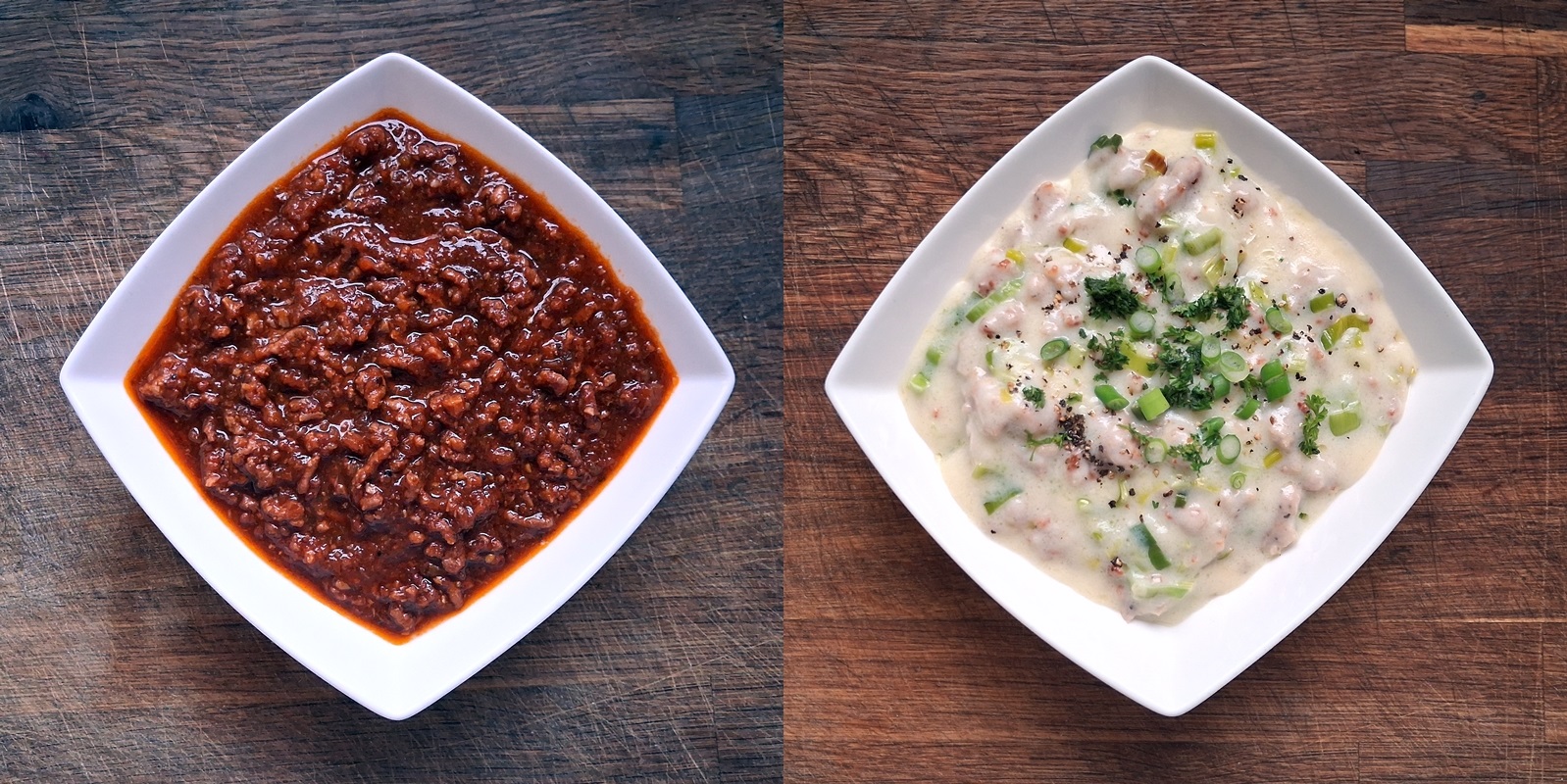
Wotchers!
January being a bit brisk, weather-wise, I have for you today two warming ragus. Aside from both being delicious (obvs), you can choose when to prepare them based on the time you have available – a lazy day? Spend it slow cooking a deeply rich and flavoursome meat-based ragu. Short on time? Whip up a fresh and savoury sausage ragu.
Firstly, we have a ‘traditional’ meat ragu. I use the inverted commas because it will probably make a native Italian gasp and clutch their pearls, but it is a recipe that I have evolved over the years, one which I can now make without too much thought at all. For the sake of posterity, I’m now writing it down for the first time and hope it will be enjoyed by others.
The main difference with regular ragu recipes is that this makes an unusually large quantity. I then portion it out and freeze in ziplock bags to be whipped out as and when required. This recipe can be halved if you don’t need/want quite so much, but I have to confess, these quantities are actually half of a regular batch for this household, which is made in a preserving pan, and which then can keep us going throughout the winter months.
Just to be clear, we’re not eating pasta bolognese three times a week – because this ragu is versatile. I use is as a basis for other dishes – since making it is practically an all-day endeavour, I don’t want to be spending all day cooking a batch every other week. Consequently, I make the largest quantity I can in one go so that I then have it available for other uses. I make no apology for these dishes being not entirely traditional – we’re not winning any awards here, we’re just talking regular home-cooked, weekday meals. With just a few tweaks, this ragu can easily provide variety in the form of Lasagna, moussaka (by following this recipe), and even spicy chilli (made by adding a generous squirt of sriracha and a drained tin of kidney beans).
It is also proportional – the basic ingredients can be gathered by following a simple set of ratios:
- For every 500g of meat:
- 1 x 400ml tin of chopped tomatoes/passata
- 1 onion
- 2 carrots
- 3 sticks of celery
- 4 cloves garlic
- 25g concentrated tomato paste
- 1 beef stock pot/cube
The easy to remember 1,2,3,4 proportions can also be used for making stock. That being said, you can swap the carrot and celery proportions, so 2 celery sticks, 3 carrots, if you’re working exclusively with meats that pair well with carrots such as beef or lamb. We’re learning so much today!

Meat Ragu
For when you have all day to let this slowly simmer.
1.5kg beef/pork mince [1]
2 smoked gammon steaks [2]
4 onions
8 carrots
12 sticks celery
16 cloves garlic
4 x 400ml tins chopped tomatoes/passata
4 beef stock pots/cubes
100g concentrated tomato paste
Any leftover wine (optional)
- Cook the meat:
- In a dry frying pan, cook the mince and the steaks. Don’t try and cook it all at once. Split it into 500g batches and cook it until the meat is noticeably browned – not just non-pink.
- You will also notice that the fat will render from the meat.
- Using a slotted spoon, lift out the meat and use the remaining fat to cook the next batch of mince.
- When all the mince is browned, cook the gammon steaks also until browned.
- Set all aside.
- Cook the vegetables:
- Pour the fat from the frying pan into your preserving pan/large saucepan, and set over a low heat.
- Peel and roughly chop the onions and garlic.
- Add them to the bowl of a food processor and blitz until very finely chopped. The finer they are chopped, the easier it will be to deny their existence in the finished ragu to vegetable-hating spouses/offspring.
- Tip the onions into the preserving pan.
- Roughly chop the celery, blitz in the food processor and add to the preserving pan.
- Wash and roughly chop the carrots, blitz in the food processor and add to the preserving pan.
- Continue to cook the vegetables, stirring regularly, until all the water in them has evaporated. You will be able to tell when this is the case as the amount of visible steam will be low if not non-existent. This will take time – around 30-40 minutes. Don’t rush this stage, as increasing the heat will mean the likelihood of having them burn is high.
- When all the water has evaporated, add in the tomato paste. Continue to cook over low heat until the tomatoes have caramelised and the colour has changed to a rusty red.
- Add wine if using, and stir to deglaze the pan. Red or white, it doesn’t matter, but a half-empty bottle needlessly cluttering up the kitchen/fridge really rustles my jimmies.
- Add in the tinned tomatoes and beef stock pots/cubes. Rinse out each container with water and tip into the main pot. Stir well.
- Add the meat into the pan and stir well.
- Bring the mixture to a simmer, stirring every 15 minutes or so.
- I don’t usually add any seasonings at this stage, because the gammon and the stock pots/cubes are both highly salted. Much better to allow them to cook into the sauce over several hours, then adjust, if necessary, at the end.
- The whole mixture needs to simmer and reduce for about 4 hours. You need to keep stirring every 15-20 minutes, to prevent the sauce from scorching on the bottom.
- If you have a heat diffuser/simmer plate, this would be an ideal opportunity to use it.
- If you have an induction hob and so are unable to use a simmer plate, I have two options for you.
- The first is something of a Macgyver simmer plate hack: put a large frying pan under your large ragu pan, between it and the heat source. The heat will diffuse across the frying pan and thus won’t be as intense under your ragu pan.You might need longer in order to reduce your sauce sufficiently.
- The second method is from Our Lady of Perpetually Sensible Recipes – Delia Smith. Turn your oven to 140°C, 120°C Fan and rearrange the shelves so that your ragu pan will fit. Bake your ragu in the oven for 3-4 hours, until the sauce has reduced to almost your preferred consistency. You can safely leave it untouched in the oven for at least 3 hours before peeking/stirring. Ideal for putting your feet up and watching a movie to recover from your HOURS of SLAVING over a hot stove, is what I loudly declare.
- When you’re happy with the consistency of your ragu, remove it from the oven/heat source and allow to cool.
- Fish out the gammon steaks and chop roughly. Blitz briefly in a food processor until shredded, then stir back into your ragu sauce.
- Taste your ragu and adjust the seasonings with salt and pepper. If you think it needs a little something else, consider one or more of the following hot fixes:
- If the tomatoes have made your sauce taste a little acidic add some sweetness in the form of honey or agave nectar, for preference, but just regular sugar is also fine. Alternately, a few good squeezes of tomato ketchup.
- If you can’t put your finger on what your sauce needs, you could slosh in a little of one or more of the following sources of umami/je-ne-sais-quoi embellishments: Worcester Sauce/Henderson’s Relish/Soy Sauce/Anchovy Sauce/Mushroom Ketchup/Thai fish sauce (go easy with the fish sauces, you only need a spoonful or two to round out the savouriness).
- Sprinkle in some MSG. Yes, I said that. What? It makes stuff taste better. Fight me.
- When cooled, portion the ragu out to your needs, label and freeze.
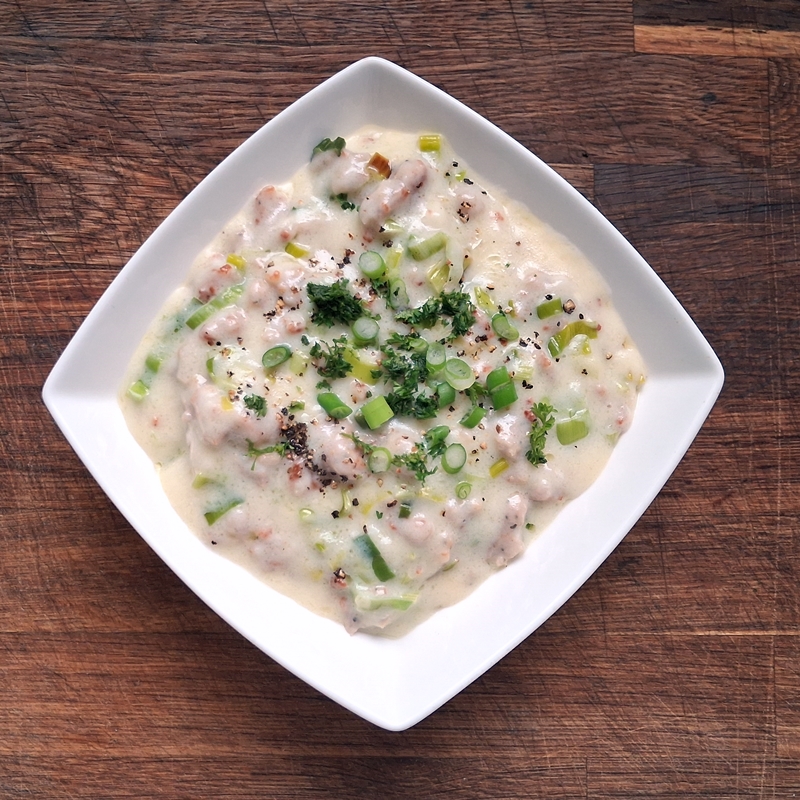
Creamy Sausage Ragu
This recipe is gluten-free.
This is a lifesaver when you’re time-poor and need a 20-minute meal STAT. The bare minimum is 1 six-pack of sausages (about 450g-ish), some flour and 500ml milk. One of its greatest charms is that it is hugely customisable, depending on your household preferences, and can be used in a variety of ways. Sidebar: it’s a variation of the ‘gravy’ used in the American favourite ‘biscuits (scones) and gravy’. Our current favourite is to include some leeks/spring onions, but you can also go down the Scarborough Fair herbs route (parsley, sage, rosemary, thyme), or spice it up with heaps of freshly cracked black pepper, red pepper flakes, sriracha sauce and a splash of coffee (a variation on another American classic – redeye gravy). Serve it however you like – with pasta, or baked potatoes, or rice. Whip up some creamy mashed potato and make a swineherd’s pie. Make a double batch and turn any leftover ragu into lasagne. Stick it in a toastie with some cheese, or why wait for that – add grated cheese directly into the pan and stir over gentle heat until it melts (Gruyere is nice).
Probably the best aspect of this recipe is that it can stretch six sausages into a main meal for four. Make the ragu go further with extra leeks/milk and/or pasta/potatoes/rice.
1 x 450g-ish pack good quality pork sausages – I recommend the Black Farmer brand
50g unsalted butter
leeks to taste (1-3, depending on size/personal taste) or 1-2 bunches of spring onions
4tbs cornflour
500ml milk – whole/skimmed/non-dairy substitute
salt
black pepper
chopped parsley (optional)
chopped spring onions (optional)
- Wash the leeks and slice thinly.
- Melt the butter in a pan over low heat and add the leeks. Toss in the butter and cook until wilted.
- Slice the sausages lengthwise and remove the skin.
- Heat a separate, non-stick pan over medium-high heat (7 of 9 on my induction hob) and add the sausages.
- Use a spatula to chop them up, while stirring and browning the pieces. I like small, mince-like pieces.
- Put the cornflour in a bowl and add some of the milk. Stir to make a slurry.
- When the sausage-meat is nicely browned (5-10 minutes), add the cornflour slurry, and the rest of the milk.
- Stir well.
- Once the mixture has thickened, add in the wilted leeks and butter.
- Taste and season well with salt and black pepper.
- Garnish with chopped parsley and spring onions.
- Serve with the carbohydrate of your choice.
[1] Morrisons supermarket in the UK have started selling this combination, in several package sizes. Alternatively buy 1kg beef mince and 500g pork mince.
[2] You can substitute bacon if you like, or if you’re planning to double the recipe, you can substitute a small, lean gammon joint – smoked or unsmoked, according to your personal taste. Slice the gammon thickly (2cm) before adding to the pot.
 Time To Cook - Online
very amusing read, thanks! It’s amazing how much using the food processor for veg helps thicken a ragu and ‘hide’ vegetables from picky eaters.
Hi,
What size tin of tomatoes?
Thanks!
Love you!
With gratitude and respect
Craig Wright
Wotchers rebelmellow!
Good catch!
My bad for leaving off that detail – they are regular 400ml tins.
I’ll update the page right now!
MAB 😀