Dal Makhani
Posted: April 17, 2026 Filed under: Mains, Side Dishes, Traditional, vegetarian | Tags: beans, Budget, easy, lentils, side dish, spicy, vegetarian 1 Comment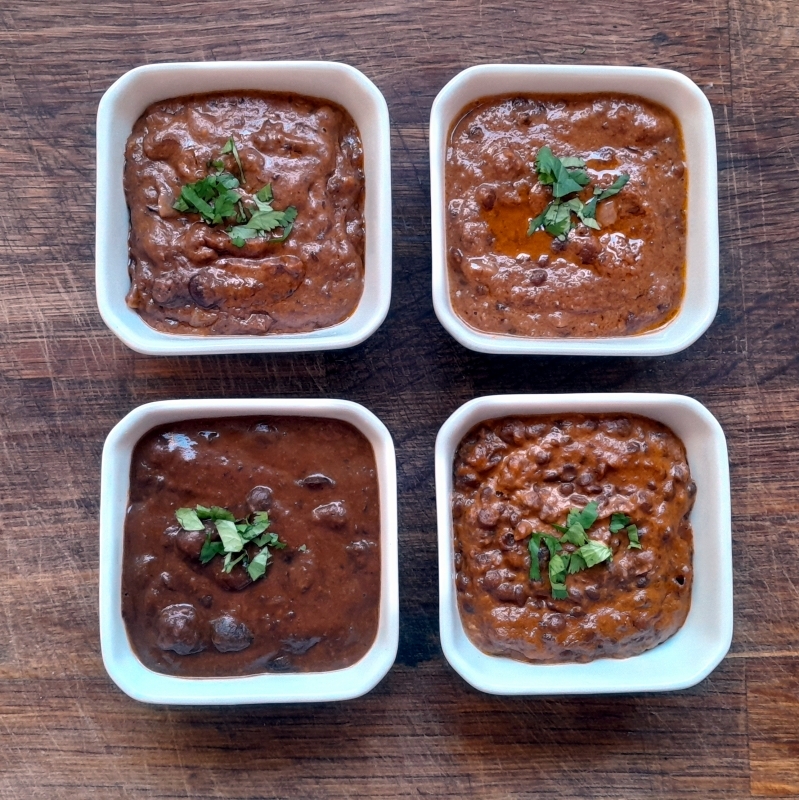
Two recipes two ways: Julie Sahni’s Kali Dal (top) with black beans and black lentils. Dishoom’s House Dal (bottom) also with black beans and black lentils.
Wotchers!
I’ve loved black dal for decades, ever since I first tasted it in Kuwait in the early 1990s. One year my friend and I threw a party on the top of our accommodation block, erecting a colourful Bedouin tent, borrowed from the parents of a student in my class, and furnishing it with large floor cushions, camel bags and kilim rugs we had acquired from shopping in the souk.
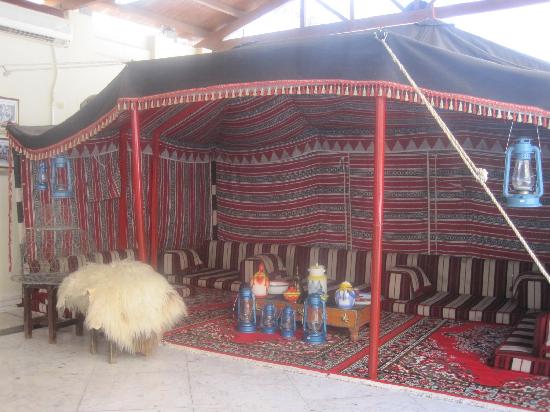
An example of a Kuwaiti-style Diwaniya tent. Source: Trip Advisor.
We asked a local Indian restaurant to provide food and one of the dishes they served was black dal. Good times.
For ages I couldn’t find a recipe that matched my memories. Then I got a hot tip that there was a very good one known as Kali Dal in Julie Sahni’s iconic book, Classic Indian Cooking (1980). So I immediately bought the book. As you do. If you’re looking for a book of incredibly flavour-filled Indian recipes, I cannot recommend this book highly enough. Somewhere on the blog, I believe I have mentioned (although I can’t find where now) that there are only three Indian recipe books you could ever want/need. The other two are: Madhur Jaffrey’s Indian Cookery (1982) and Mrs Balbir Singh’s Indian Cookery (1961). Madhur Jaffrey’s book has a sentimental place in my heart, as, together with her TV series, it was how she introduced Indian food to the UK back in the 1980s. Mrs Balbir Singh’s book I love because she was unashamedly a stickler for authenticity. Never mind that some the ingredients for her recipes might be a challenge to find in shops nowadays, in the UK of the 1960s, outside of Indian communities, they would have been almost impossible. That did not deter Mrs Balbir Singh. No ‘That’ll Do’ recipes for her! If you want to know how to make genuine and authentic Indian food, her book is a must-have, although the original edition is horribly pricey nowadays.
ANYHOO…
Back to Julie Sahni’s Kali Dal.
Initially, I was surprised to find that she uses black beans (and some kidney beans) in her recipe, because in my experience dal was made with lentils, but I went with the flow and have been making it with black beans ever since. Lately (as in, the last decade) I’ve been hearing buzz ‘on the socials’ about the black dal served at Dishoom. Now, although I love Ms Sahni’s dal very much, I am always open to a new take on an old favourite, and since you can’t really compare one recipe to another without having a side-by-side comparison, I opted to make Dishoom’s recipe as well. I recently acquired some black lentils[1] and decided to see how each recipe fared using them, so whipped up a batch of each (yes – four batches of black dal. But be not alarmed, it freezes well) with both black beans and black lentils, to see if there was any major differences, and whether or not I liked one over the other.
I’ve long-since abandoned the red kidney beans in the Kali Dal as ensuring they’re cooked at a sufficiently-high temperature for the recommended length of time was a bit of a Faff™, and the recipe is quite long enough as it is. Also, I don’t currently own Dishoom’s recipe book, but to aid my experimentation, I found this old Guardian article online, which helpfully included four of Dishoom’s recipes, including their dal.
So pull up a chair and lets get started.
I’m actually going to tackle this a bit backwards, offering the results first, and the recipes at the end, so you can make an informed decision on which recipe you feel speaks to you.
Black dal with black lentils.
The main difference making black dal with black lentils is the time it takes. The cooking time is a lot shorter. An additional difference is the texture. The resulting dal is a lighter bite and has a more lentil-y mouthfeel. The black lentils hold their shape well, which is great for a variety of recipes, but with dal it means that there isn’t a naturally-evolved creaminess. Juli Sahni’s recipe includes an instruction to puree 2-3 cups of the cooked dal and then stir the puree back into the whole, and following this method does improve the texture.
Black dal with black beans
When using black beans, the resulting dal is much more substantial. It turns into more of a full meal component. It’s thick and unctuous with a rich mouth-feel. The long, slow cooking of the aromatics, the pureeing of some of the cooked dal to enhance the creaminess, and the brightening effect of the tadka to finish turn humble ingredients into a thing of luxury. You definitely need something to accompany it, whether rice or one of the many delicious Indian breads, and a fresh salad on the side.
Kali Dal vs Dishoom House Dal
For my palate, the results of the taste test were overwhelming: Kali Dal made with black beans remains the ultimate black dal recipe. The increased spices and aromatics, the decadence from the ghee and the cream, together with the rich, satisfying texture make Julie Sahni’s dal the stand-out recipe. For my tastes, there just aren’t enough flavourings in the Dishoom recipe. A major influence on the finished Kali Dal dish is the use of a tadka, a rich and aromatic mixture of spice, ghee and fresh onion that really lifts and brightens the dal after the many hours of cooking.
What have we learned from this experiment?
Dishoom’s recipe: If you’ve never tried black dal, Dishoom’s recipe with black lentils is a good place to start. It’s lighter, has a shorter cooking time and is very gently spiced. I preferred the black lentil version to the version made with black beans. Once cooked, I’d recommend pureeing about 1/3 of the mixture to help make the finished dish smoother and creamier. You can initially use just a generic garam masala, but Dishoom also have their own house garam masala, and having made and used it myself, I really like the brightness and unusual mix of spices. I recommend giving it a try. The recipe is given at the bottom of the page. I would suggest increasing the quantities of spice given in the recipe, say double the quantities, to really make a flavoursome impact. If you would like to take things a little further, I would also suggest using the tadka from the Kali Dal recipe to finish off the dish.
Julie Sahni’s Kali Dal: This version of black dal, made with dried black beans, is the standard by with all other black dal recipes should be judged. And rightly so. Using black beans gives body and substance to the dish, and the generous mix of flavourings, especially the tadka at the end, make for a luxurious eating experience. The cream and pure butter ghee don’t hurt, either. I like that the initial soaking liquid is also used for the cooking, as it preserves much of the deep colouring of the beans during cooking, which is lost in the Dishoom method. Using a slow cooker is a great way to turn this recipe into a ‘hands-off’ cook, although you will need to let it simmer with the lid off for an hour or two to evaporate excess liquid. In my opinion, this recipe does not work as well when made with black lentils.
Julie Sahni’s Kali Dal
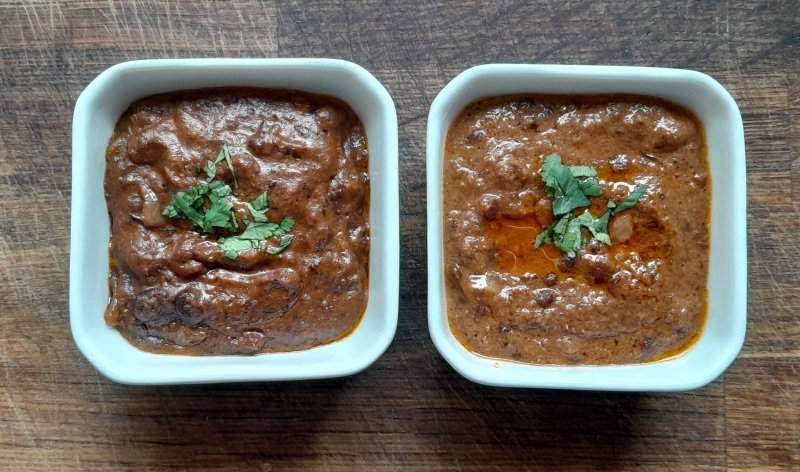
Julie Sahni’s Kali Dal made with black beans(L) and black lentils (R)
For the beans
250g urad dal (black beans)
150g onions, chopped (roughly 2 medium)
2 tbs fresh ginger, chopped
120g drained, chopped tinned tomatoes OR 80g tomato paste
250ml plain yogurt
½ tsp ground cardamom seeds
1 tbs ground coriander
½ tsp ground Kashmiri chilli pepper (mild)
1 tsp salt
100g ghee (or unsalted butter)
For the Tadka
60g ghee
1½ tsp cumin seeds
150g onions, finely chopped (2 medium)
To finish
125ml double cream
4 tbs chopped, fresh coriander
- Wash the gram beans until the water runs clear.
- Put the beans into a pan and add 1 litre of cold water.
- Bring the beans to a boil, remove from the heat and allow to soak for 2 hours.
- Put the rest of the ingredients for the beans – except the ghee – into a food processor/blender and puree smooth.
- Tip the mixture into the pan of beans and water, and add the ghee.
- Bring the mixture to a boil, reduce the heat, partially cover the pan and simmer for 4-5 hours, until the beans are soft and creamy, stirring every 30 minutes. Alternatively, tip the mixture into a slow cooker and cook on high for 4-5 hours, stirring every 30 minutes. The stirring is important, as the action of the spoon will help break down the beans and make the mixture creamy.
- The beans are cooked when they can be pressed to a paste between finger and thumb. If the texture is more crumbly, then they will need more time.
- When the beans are cooked, remove about 750ml and puree either in a liquidiser or in a jug using an immersion blender. Stir the pureed beans back into the rest of the pan and assess the texture. It will be down to your personal preference, but if you think it is too thin, then allow it to gently simmer with the lid off until the texture is to your liking.
- When ready to serve, make the tadka.
- Melt the ghee in a small pan, then add the cumin seeds. Cook for 10-15 seconds, then add in the finely-chopped onion. Cook over medium-high heat, stirring until lightly browned. You want them to be slightly coloured, but still having some texture – about 10 minutes or so.
- Pour the contents of the pan into the dal, together with the cream and chopped coriander. Stir all together well. The dal is now ready to serve.
- NB If you plan on freezing some/all of the dal, omit the cream and coriander and add them when the dal has reheated and you’re ready to serve.
- Serve with rice and a fresh salad. I like to serve naan bread as well, but that will earn you gasps of outrage from traditionalists (roti/chapati are the more customary accompaniments). Sorry, not sorry.
Dishoom’s House Dal
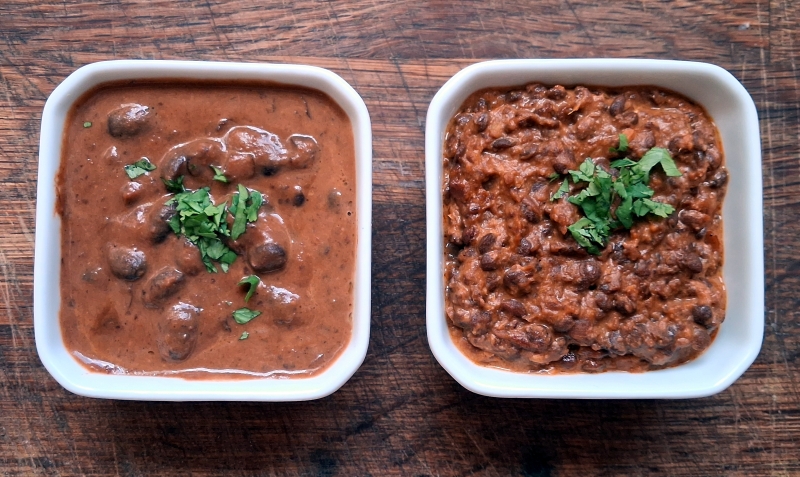
Dishoom’s House Dal with black beans (L) and black lentils (R)
300g urad dal
4 litres cold water
12g garlic paste
10g ginger paste
70g tomato puree
8g fine sea salt
⅔ tsp deggi mirch chilli powder (sub with Kashmiri chilli powder)
⅓ tsp garam masala
90g unsalted butter
90ml double cream
Chapatis, to serve
- Put the dal into a large bowl, cover with water and whisk for 10 seconds.
- Let the dal settle, then pour out the water.
- Repeat three or four times, until the water is clear.
- Tip the dal into a large saucepan and pour in at least four litres of cold water.
- Bring to a boil and cook steadily for two to three hours.
- Skim off any impurities that rise to the surface, and add more boiling water as required to keep the grains well covered. The dal grains need to become completely soft, with the skins coming away from the white grain. When pressed, the white part should be creamy, rather than crumbly.
- When cooked, turn off the heat and set aside for 15 minutes.
- In a bowl, combine the garlic and ginger pastes, tomato puree, salt, chilli powder and garam masala into a paste.
- Pour off the dal cooking water, then pour on enough freshly boiled water to cover the dal by 3-4cm.
- Bring to a boil over a medium-high heat, then add the aromatic paste and butter.
- Cook rapidly for 30 minutes, stirring regularly to prevent the mixture from sticking.
- Lower the heat and simmer for one to one and a half hours more, stirring regularly to prevent it from sticking, and adding a little boiling water if the liquid level gets near the level of the grains.
- Eventually, the dal will turn thick and creamy. The creaminess must come from the grains disintegrating into the liquid and enriching it, not from the water being allowed to evaporate, leaving only the grains behind.
- Add the cream and cook for a further 15 minutes.
- Serve with chapatis or other Indian breads.
- When reheating any leftover dal, you may need to add a little more liquid; use cream or cream and water, rather than just water alone.
Dishoom’s Garam Masala
1 black cardamom pod
4 cloves
5g black peppercorns
2 large cinnamon sticks
10g coriander seeds
5g cumin seeds
4g fennel seeds
2g star anise
1 bay leaf
2g mace blades
10g poppy seeds
2g dried rose petals
large pinch of saffron
1 tsp grated nutmeg
- Place the cardamom, cloves, peppercorns, cinnamon sticks, coriander, cumin & fennel seeds, star anise, bay leaf and mace in a cold frying pan.
- Put the pan over medium heat and toast for 2 minutes. Turn off the heat.
- Add the poppy seeds, rose petals, saffron and the nutmeg to the pan and allow the spices to cool.
- When cold, transfer the mixture to a spice grinder and grind to a fine powder.
- Store in an airtight container.
[1] I ordered black lentils from here. Arrived in 3 days. Not a sponsor.
 Time To Cook - Online
Interesting recipes! I’d like to try the black bean version but I would start by pre-cooking the beans and water in my Instant Pot – then follow your recipe as directed.
Marjorie